AI becomes most interesting when it is connected to a concrete task that employees actually face. That was also why the case from Kalundborg Municipality played such a central role in our webinar about AI apps on Promte.
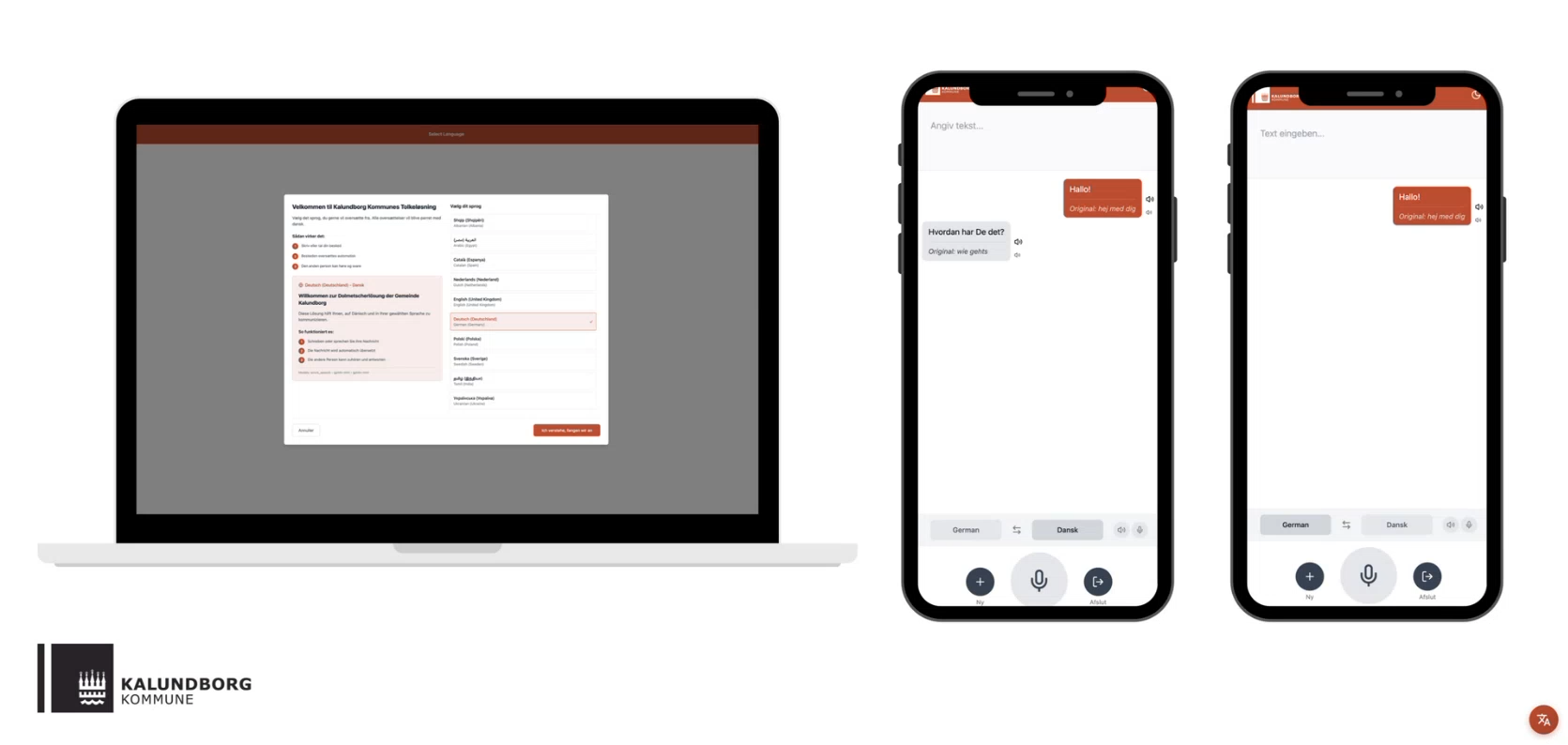
Here, Parthee Vijayamohan, AI Program Lead in Kalundborg Municipality, described the work on an interpreting solution built as an AI app. The case is interesting because it is not only about technology. It is also about testing, organisation, language quality and the work required before a solution can be used in practice.
For many municipalities, this is exactly where AI projects become real: not in the idea phase, but when they have to work in everyday life.
Interpreting is a good example of a workflow where AI is not primarily about "chatting", but about supporting a concrete situation.
When employees meet citizens with different language backgrounds, the need is very practical. Translation must be fast and understandable. That applies both in the individual conversation and in a broader organisational context where quality, accessibility and workflows need to fit together.
There is also an economic dimension. In many situations, an AI-based interpreting solution can be far cheaper than using a traditional interpreter, making the case relevant for municipalities that want to improve accessibility and use resources more efficiently.
That makes interpreting well suited to an AI app. There is a clear purpose, a well-defined usage scenario and a clear need for a solution that can be used by employees without a technical background.
In the webinar, the interpreting solution was also highlighted as an example that AI apps are not only a new interface. They are a way to operationalise a concrete task.
An important point from Kalundborg Municipality was that the solution was not merely presented as an idea. It had been tested over time.
In the webinar, Kalundborg explained that the solution had been tested for around six months in two areas, including the job centre and the children and family area. The focus was especially on how well the solution translated in the relevant situations.
That is worth noting. In many AI projects, it is tempting to move quickly from the first working version to a broad launch. Kalundborg instead described a process where time was spent testing, learning and qualifying the solution before it was rolled out more broadly.
That is a mature approach to AI in operation. Not because everything has to take a long time, but because language quality and usability must be tested in the reality where the solution will actually be used.
Kalundborg also described how the municipality had worked systematically with test data.
According to the presentation, a dataset was prepared in collaboration with Lejre and Holbaek Municipality. The starting point was 1,000 questions and answers relevant in a municipal context. The material was translated into five of the languages most commonly used in Kalundborg, including Somali, Arabic and Ukrainian.
The test foundation was also expanded so the solution could be tested on up to 10,000 derived questions based on the original set. The purpose was not just to get impressive individual examples, but to create a more robust basis for assessing how the solution actually performs.
It is a good example of the fact that quality in AI solutions does not arise by itself. It has to be supported by systematic work with data, testing and evaluation.
Kalundborg also mentioned that a larger spreadsheet-based testing overview had been established, making it possible to review answers and translations more systematically. It may not be the most glamorous part of AI work, but it is often the most decisive.
When describing municipal AI solutions, it is important to be precise. That also applies here.
In the webinar, Kalundborg Municipality described that the interpreting solution had been legally reviewed in their own setup, and that the municipality had received the green light for the uses they discussed in the presentation. At the same time, they emphasised that the assessments were tied to the way their solution was configured.
That is an important nuance. The case should be read as an example of how one municipality approached the task in its own operational situation, not as a general legal conclusion for everyone else.
The same applies to data handling. In the webinar, Kalundborg explained that audio files in the solution were stored for a period and then automatically deleted, and that the retention period had been set based on their concrete needs and recommendations in their setup.
This also contributes to making the solution safe to use. Data is processed in the EU, which is an important part of the setup Kalundborg has chosen when working with sensitive information and municipal workflows.
These kinds of details matter because they show something central about AI in practice: good solutions are not only made up of model choices and user interfaces, but also clear operational decisions.
In the webinar, Kalundborg explained that the municipality would begin implementing the solution in more areas during the spring, and that the broader rollout was planned to start on 23 March 2026.
That makes the case particularly relevant. It shows not just a pilot project, but a solution on its way further into the organisation.
For other municipalities, this is interesting because it points to a realistic model for AI work:
It is rarely the fastest path to a demo. But it is often a better path to something that lasts.
Kalundborg Municipality's interpreting solution is interesting because it brings together several of the things AI apps need to do in municipal practice.
It solves a concrete task. It is built for a clear usage scenario. It has been tested before broad rollout. And it is anchored in considerations about operations and use, not only in technology.
That is precisely the kind of case that makes AI less abstract. Not because every municipality should build the same solution, but because the case shows how an AI app can take shape when need, interface and operations are considered together.
If you are working with similar challenges in your municipality and would like to discuss whether an AI app could be the right path, you are very welcome to contact Promte for a non-binding dialogue.